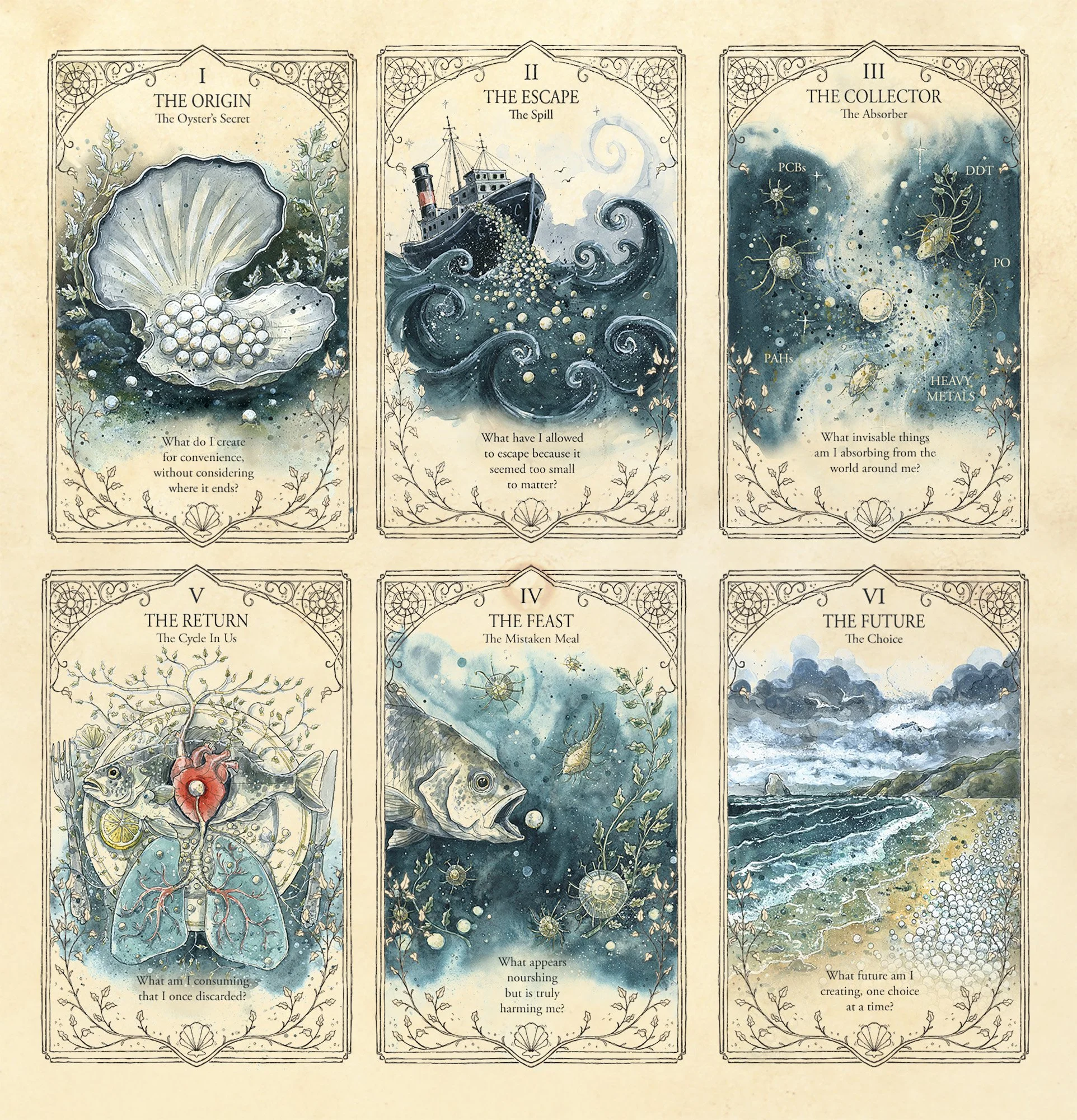
The Nurdle Project: The Oracle Cards Take Shape
The artwork is finished.
The colours have been added, the illustrations have finally become the images I had been seeing in my head, and now the next part of the project can begin.
The six artworks have become something more than illustrations.
They have become oracle cards.
This is the part of the project where the idea of the Apothecary of Consequences really begins to come together.
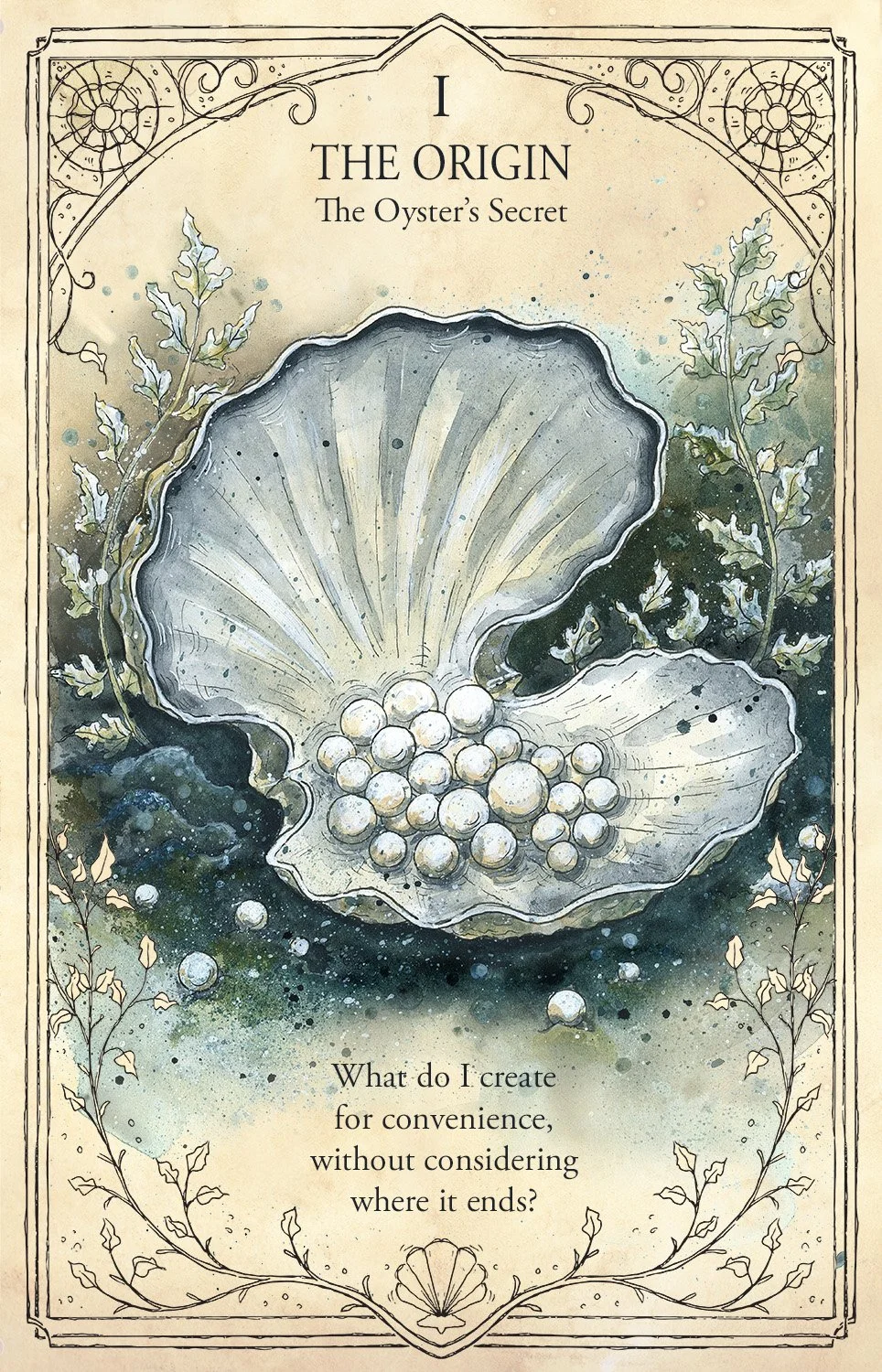
An oracle with a difference
I wanted to borrow the language of an oracle deck — something mysterious, symbolic and slightly magical — but turn the idea on its head.
Traditional oracle cards might offer guidance, reassurance or a message about what lies ahead.
These cards are rather different.
They ask us to look at something that is already here.
The consequences of our relationship with plastic.
Each card represents a different aspect of the problem, using imagery drawn from the natural world, the strange beauty of found objects and the language of old apothecaries and alchemical collections.
They aren't intended to predict the future.
Instead, they ask us to consider the future we are creating.
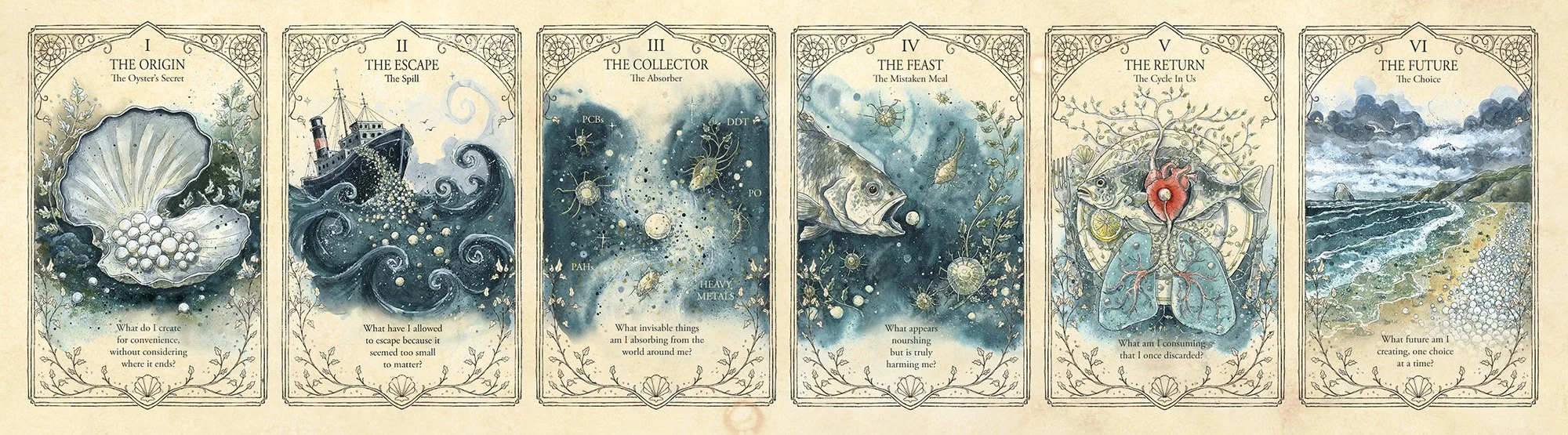
Why six cards?
I wanted the collection to feel small and deliberate.
Six cards are enough to create a little world without overwhelming the viewer, and each one has its own character and symbolism.
I've spent a lot of time thinking about what each card should represent and how the imagery could communicate an idea without simply spelling it out.
There are references to nature.
There are references to consumption.
There are references to transformation and contamination.
And, running through all of them, is the idea of consequence.
A tiny object can travel.
It can disappear into the environment.
It can be eaten.
It can enter a food chain.
It can remain long after the thing that created it has been forgotten.
That felt like a powerful story to tell through something as familiar as a card.
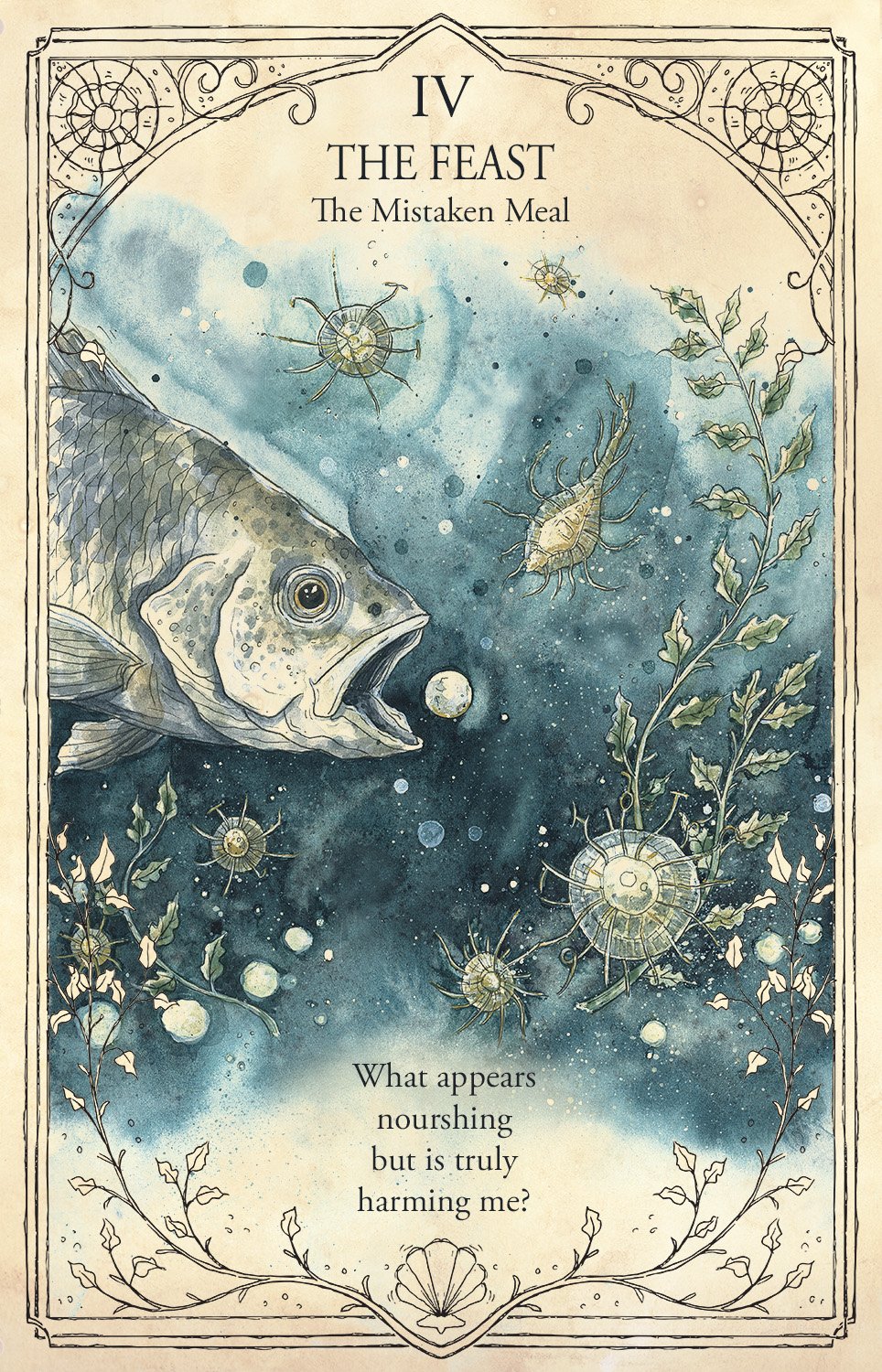
From illustration to object
There is also something important about physically turning the artwork into a card.
A drawing pinned to a wall is one thing.
A small card that you can pick up and hold is something else entirely.
It becomes almost like a specimen.
A clue.
Something from another world.
I want visitors to be able to approach the cards with curiosity before they realise what they are actually looking at.
Hopefully there will be a moment of:
"Oh... this is beautiful."
Followed by:
"Wait. What am I looking at?"
That little shift is important.
Because the project isn't intended to lecture.
I want it to intrigue first.
Then make you think.

The beginning of the Apothecary
The cards are also the point where the wider installation starts to make sense.
I've been collecting bottles and objects, experimenting with what each might contain and how they might be presented.
The idea is that the cards and the bottles belong to the same strange fictional apothecary.
An apothecary of consequences.
A place where the things we've created, discarded and allowed to escape have somehow been bottled, catalogued and preserved.
The cards tell part of the story.
The bottles will tell another.
And that is what I've been working on next.