The Great Nurdle Hunt — The Exhibition
After weeks of drawing, painting, filling strange old bottles and thinking about some very small pieces of plastic, The Great Nurdle Hunt has finally opened at Quay Arts.
And for the first time, I can show you the finished pieces properly.
If you’ve been following along here, you’ll have seen fragments of this project appearing in the studio: black-and-white drawings slowly gaining colour, tiny plastic nurdles collected from the shoreline, antique bottles gathered together and the beginnings of an idea that eventually became The Oracle of Small Things and The Apothecary of Consequences.
But until now, I’ve deliberately kept some of the finished project hidden.
So… welcome to the exhibition.
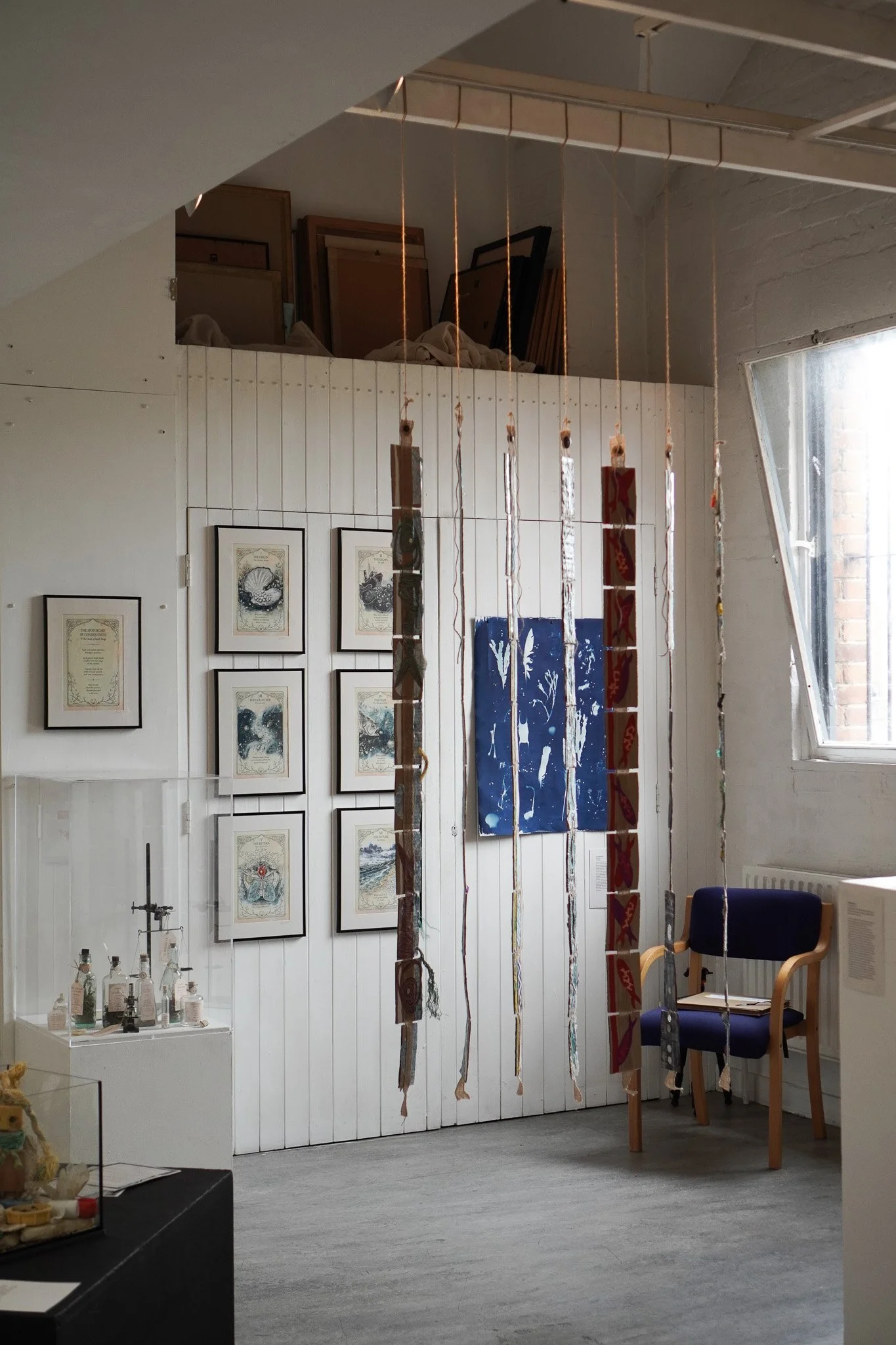
The Oracle of Small Things
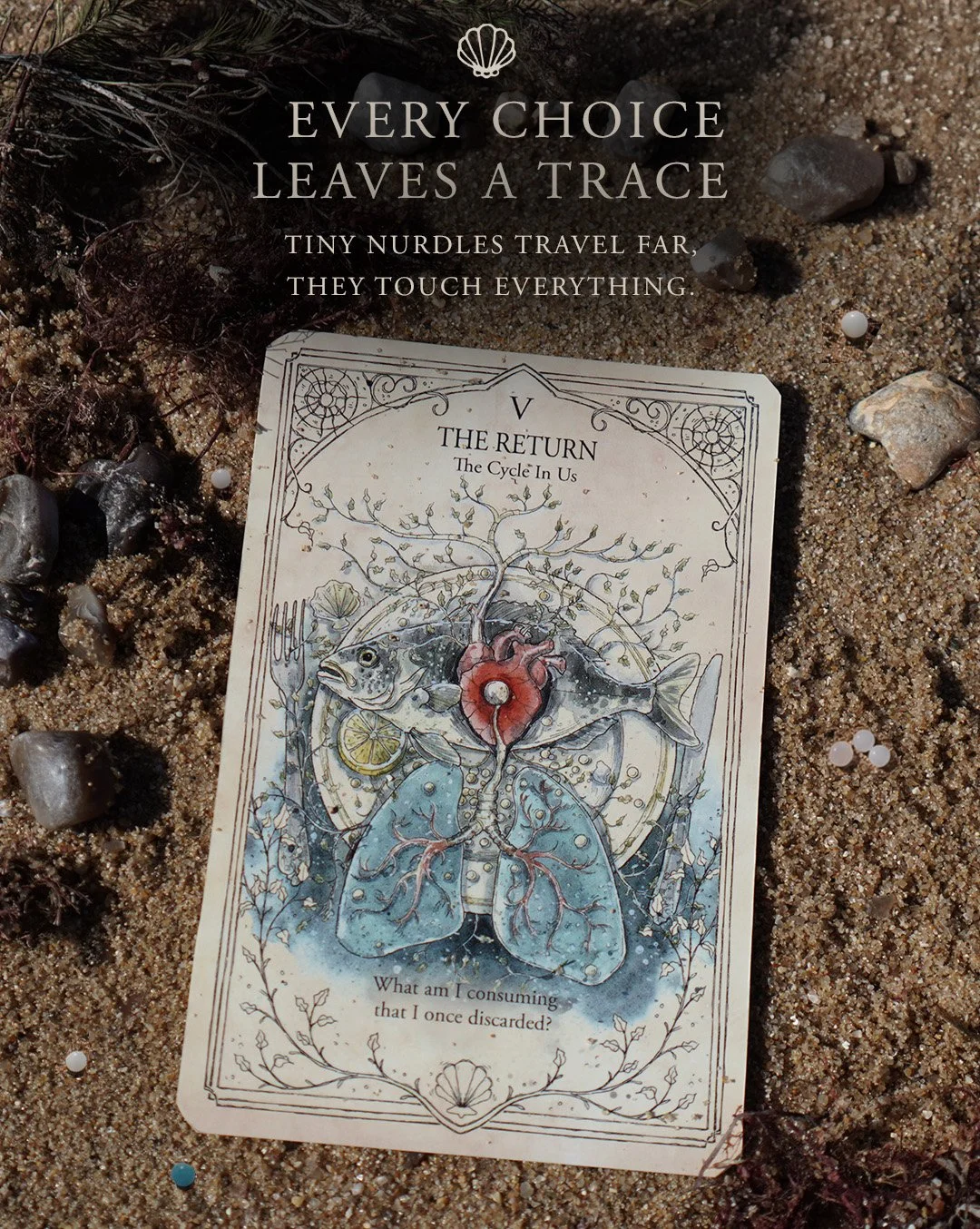
At the heart of my contribution are six illustrated oracle cards.
I wanted to explore the nurdle problem in the way I naturally tend to explore things: through drawing, storytelling, symbolism and just a little bit of magic.
Nurdles are extraordinarily easy to overlook. They’re tiny plastic pellets, the raw material used in the manufacture of countless plastic products, yet when they escape into the environment they can travel enormous distances and remain there for years.
That contrast fascinated me.
Something so small.
Something seemingly insignificant.
And yet something capable of leaving such a long shadow.
So rather than simply illustrating plastic pollution, I created an oracle.
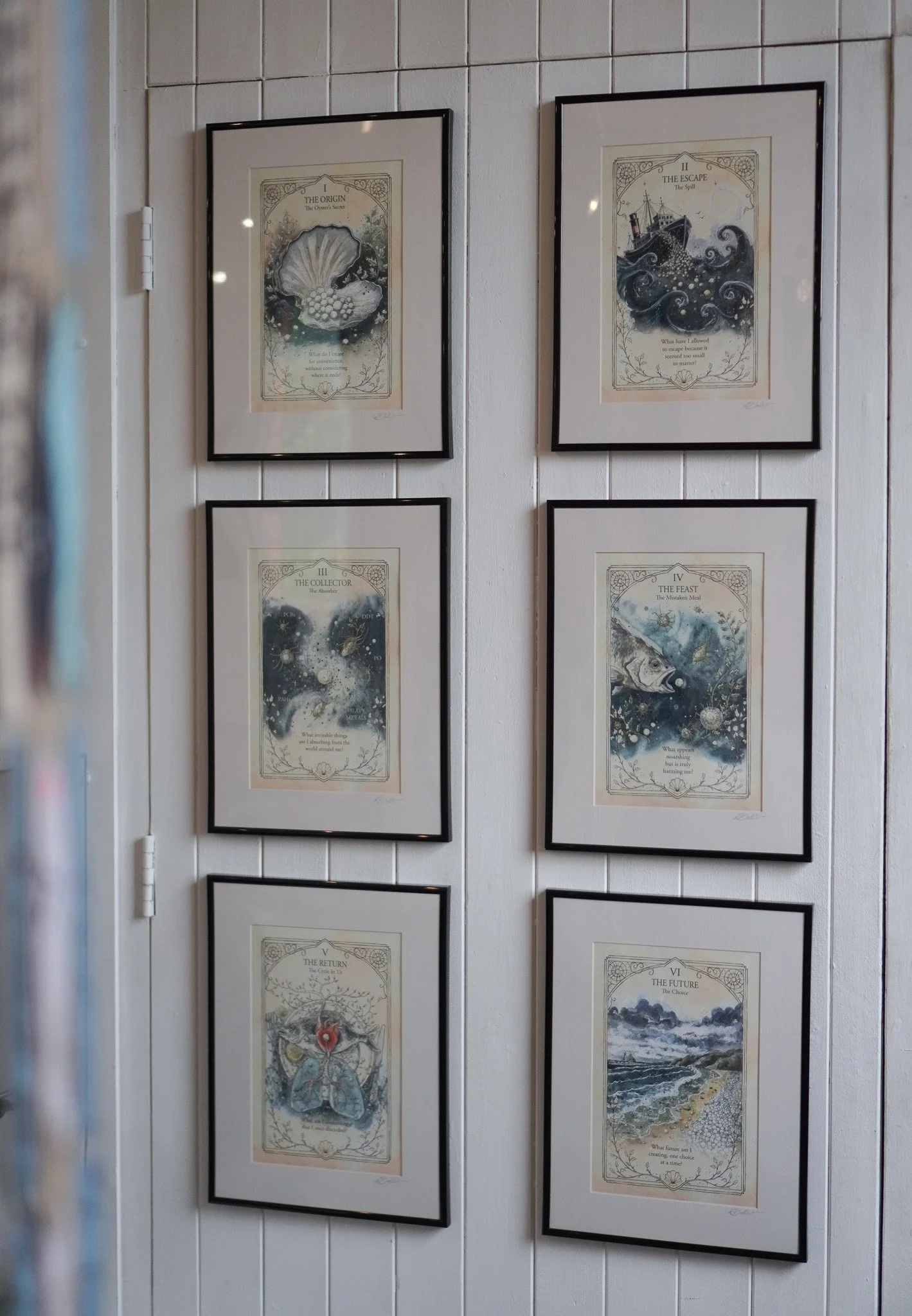
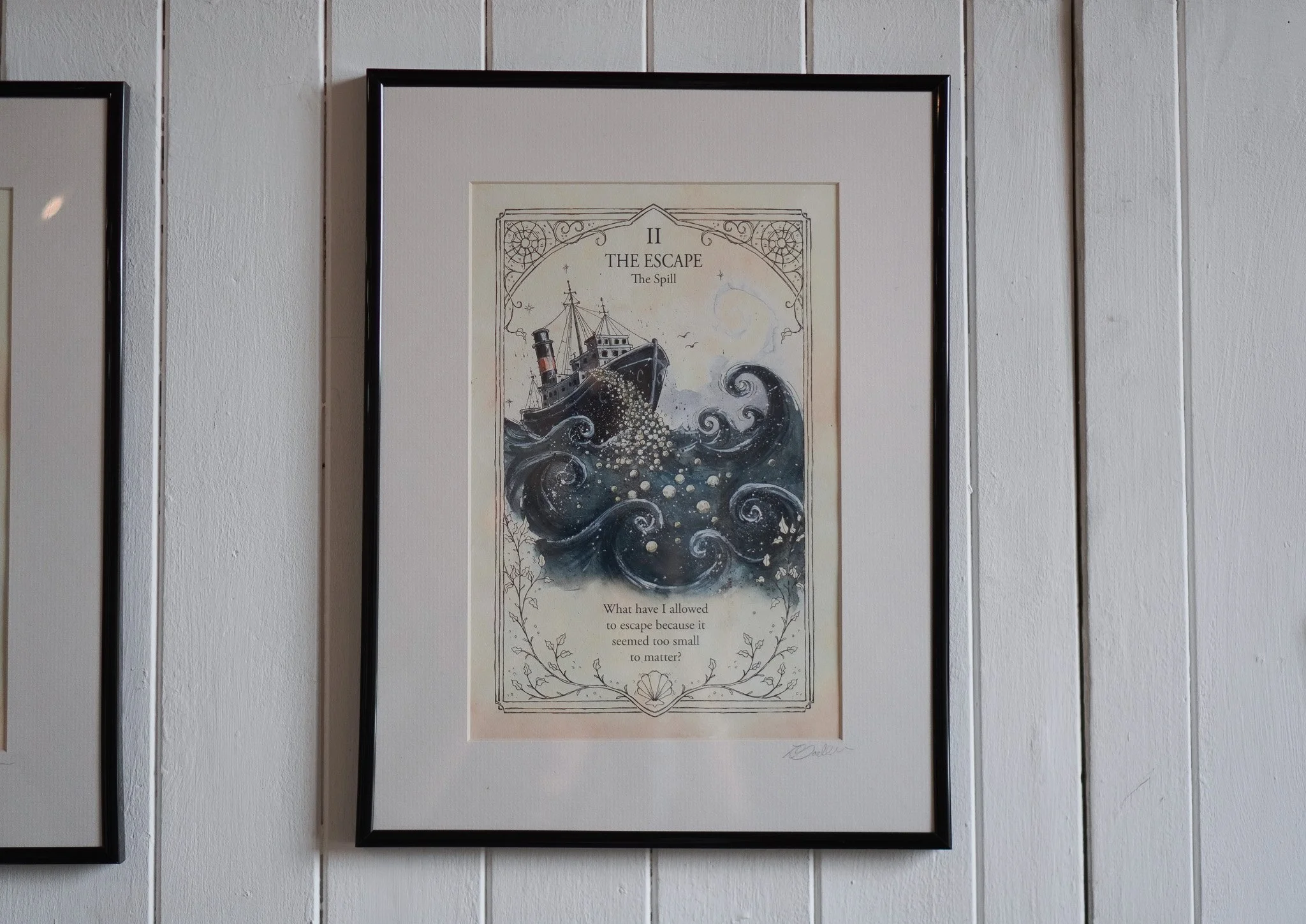
Each of the six cards represents a stage in the story and poses a question about our relationship with plastic, consumption and the natural world.
They begin with something beautiful and seemingly untouched, before moving gradually through manufacture, use, pollution and consequence.
The final card deliberately doesn't provide a neat ending.
Because that part of the story hasn't been written yet.
The Apothecary of Consequences
Sitting alongside the cards is their physical counterpart: The Apothecary of Consequences.
Six old bottles. Six strange concoctions.
Each bottle corresponds with one of the oracle cards, transforming the questions within the illustrations into something tangible.
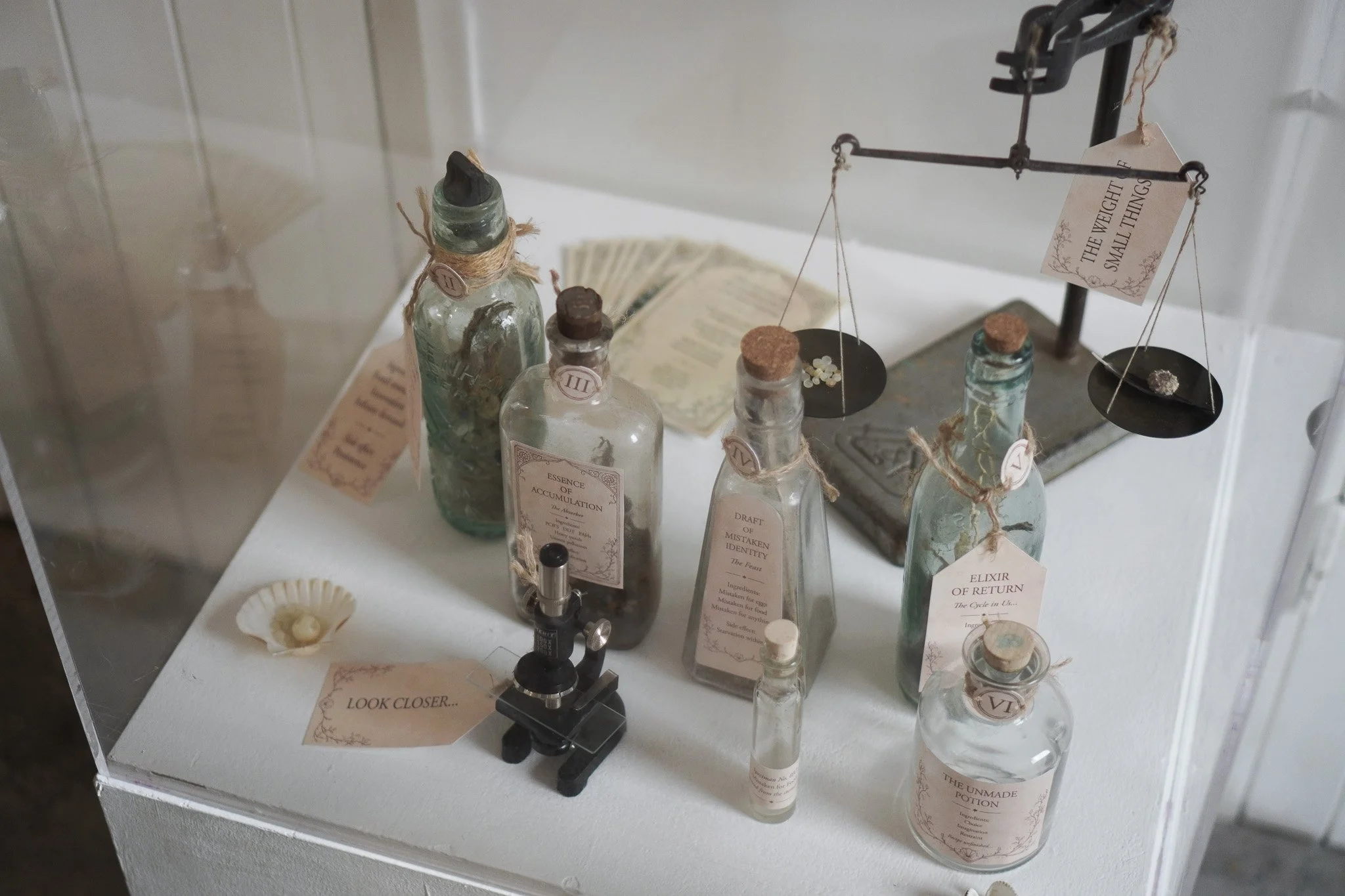
I loved creating this part of the installation.
Some of the bottles are beautifully clear; others are stained, battered and marked by whatever lives they had before they found their way into my studio. One even bears the name of an old Isle of Wight business.
Rather than hiding those imperfections, I wanted them to become part of the story.
The contents gradually change too.
What begins clean and pristine becomes increasingly altered as we move through the installation — until the distinction between something precious and something polluted becomes rather uncomfortable.
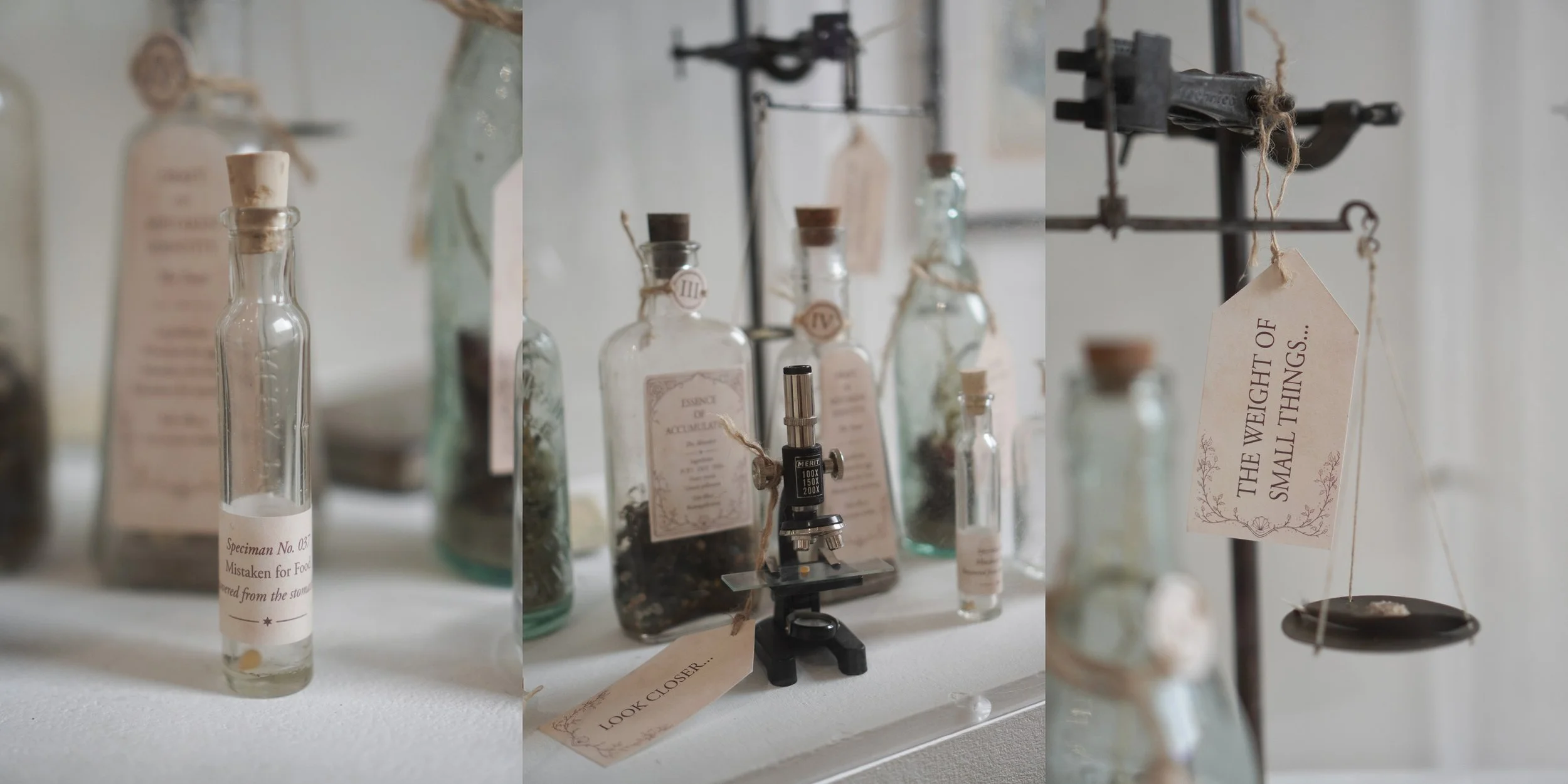
The apothecary answers the questions posed by the oracle, but not necessarily with the answers we might want.
There is something slightly absurd about presenting plastic pollution as beautiful little potions in antique bottles.
That's intentional.
We're very good at making things desirable.
We're perhaps less good at considering what happens to them afterwards.
From the shoreline to the gallery
One of the things I wanted this project to retain was its connection to the place where it began.
The nurdles in the installation aren't simply decorative objects bought for an artwork. They connect back to the shoreline, to searching amongst sand, seaweed, shells and all the tiny things washed in with the tide.
Once you begin looking for nurdles, they're strangely difficult to stop seeing.
And perhaps that's one of the things I've taken away from this project.
We often imagine environmental problems as enormous things happening somewhere else.
Sometimes they're almost too large to comprehend.
But occasionally they are sitting amongst the shells at your feet.
Tiny enough to balance on the end of a finger.
The Great Nurdle Hunt
My installation is only one small part of a much larger exhibition.
The Great Nurdle Hunt brings together work by Island artists responding to nurdles, plastic pollution and our relationship with the sea and environment.
One of my favourite things about seeing the finished exhibition has been discovering how differently everyone responded to the same starting point.
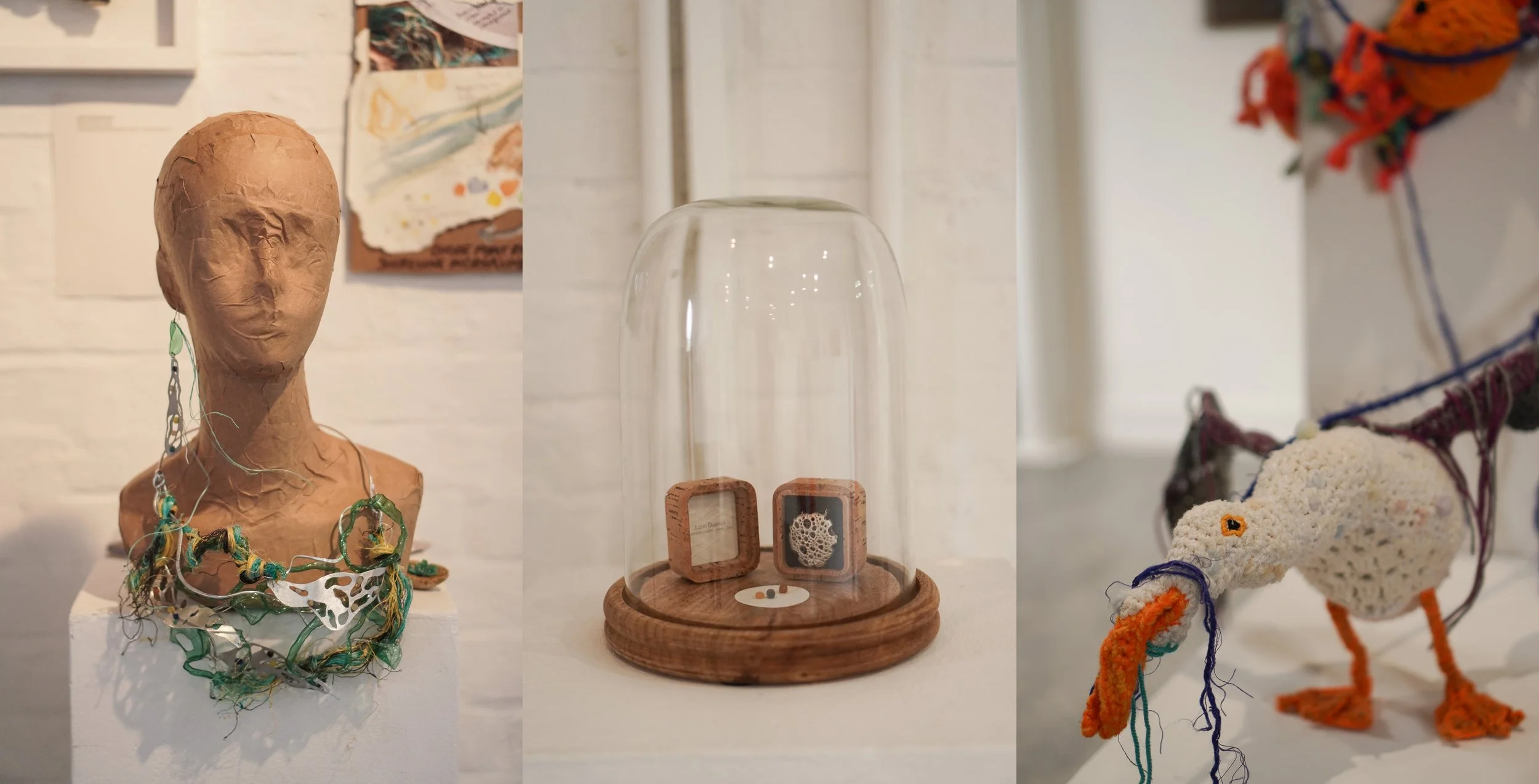
Where my own instinct was to disappear down a rabbit hole of oracle cards, mysterious bottles and imaginary apothecaries, elsewhere in the gallery the subject has been interpreted through completely different materials, ideas and visual languages.
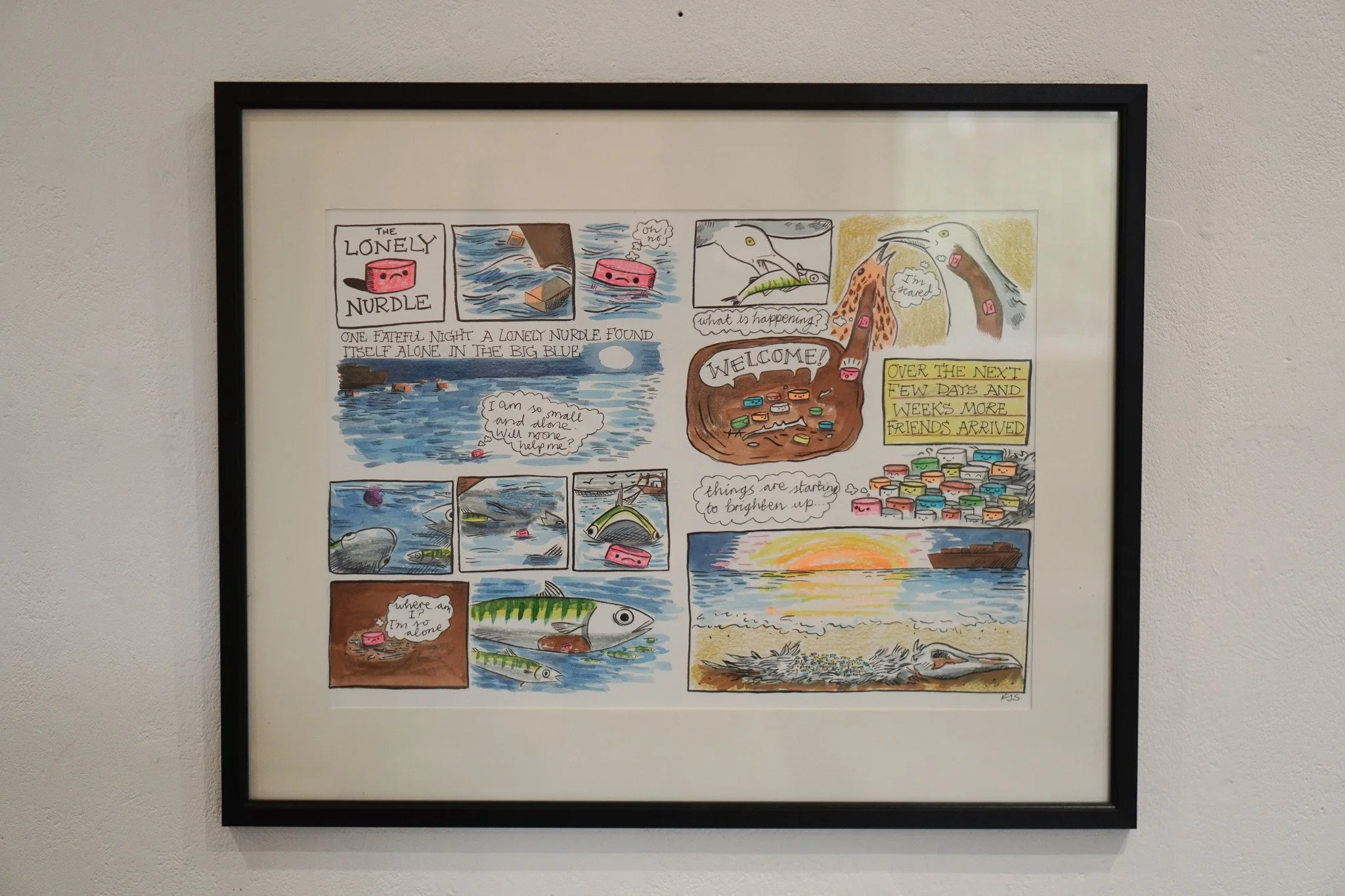
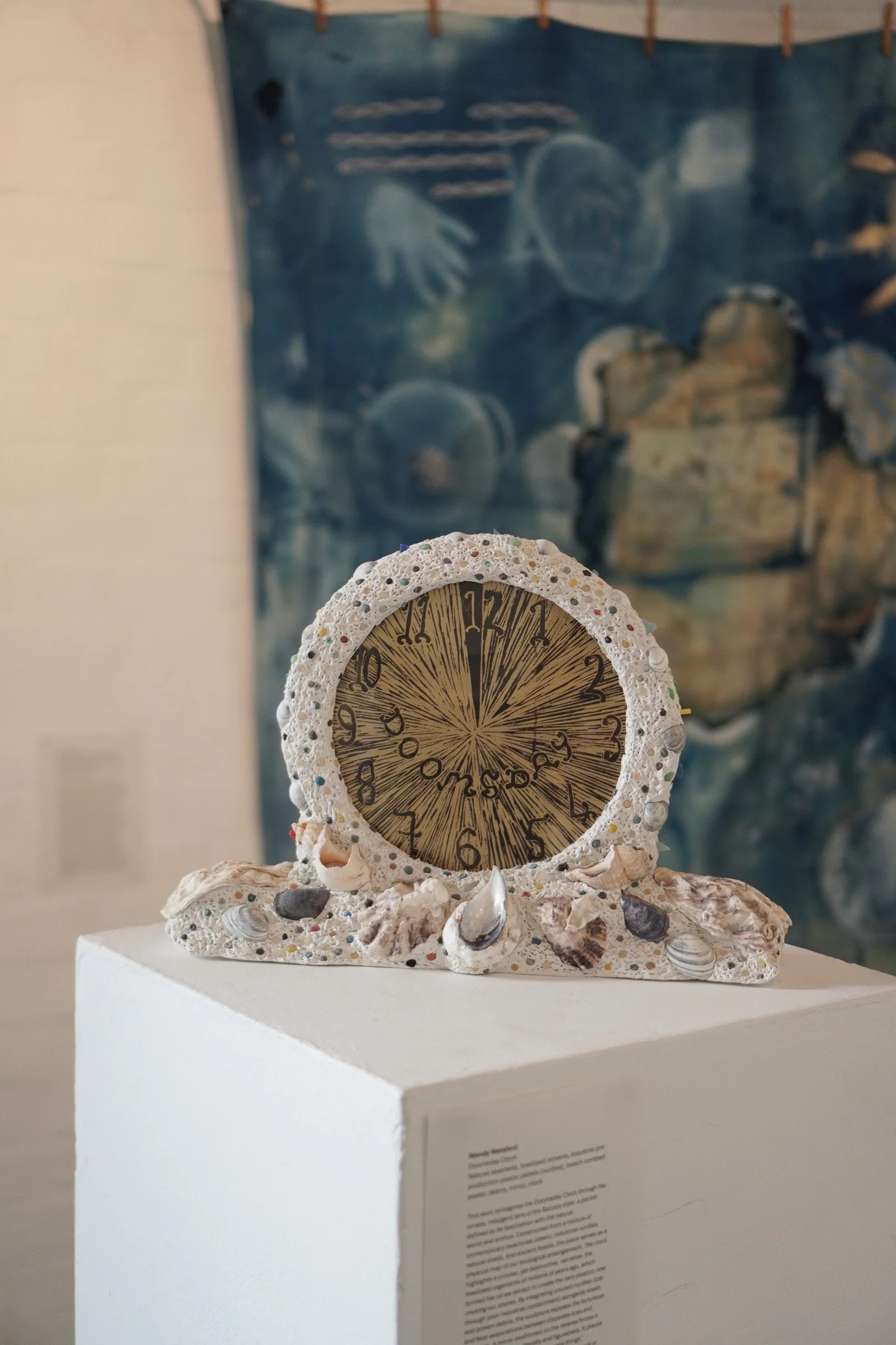
Together the works make something much bigger than any individual response.
And I think that's particularly fitting for a project about nurdles.
One tiny piece of plastic doesn't look terribly significant.
Thousands of them tell a very different story.
Seeing it all together
There is always a strange moment when something that has existed almost entirely inside my studio suddenly leaves it.
For weeks I've been looking at these drawings from inches away. I've moved bottles backwards and forwards, changed labels, rearranged objects and wondered whether all the separate pieces would actually make sense once they were brought together.
Then suddenly they were no longer scattered across my desk.
They were an installation.
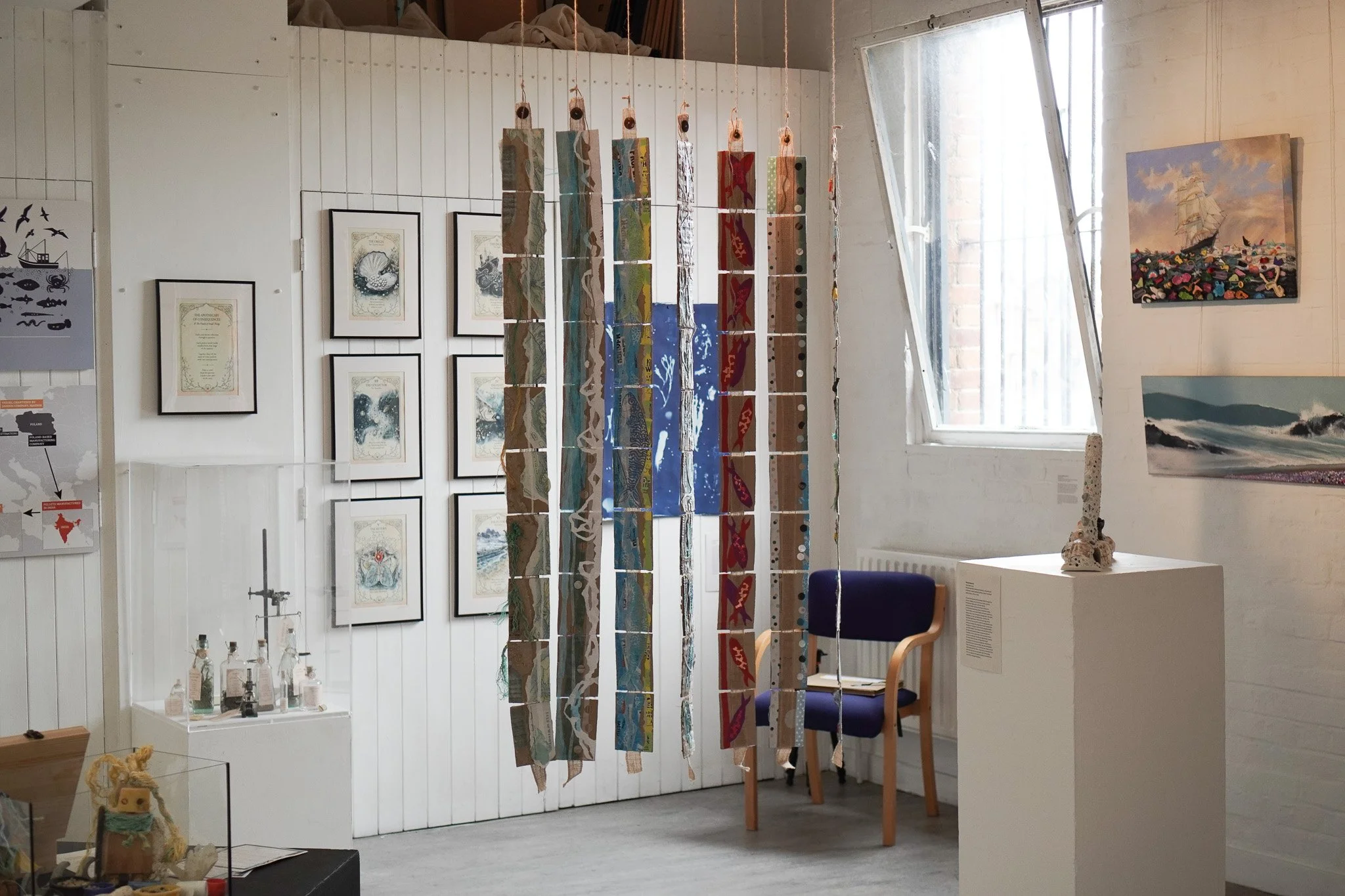
And standing back from it in the gallery, I realised that this project has become about something slightly broader than nurdles.
It's about the things we don't notice.
The objects we make, use and discard.
The traces they leave behind.
And the uncomfortable fact that there is no magical potion capable of making those consequences disappear.
But an oracle isn't supposed to tell you exactly what will happen.
It asks you to look more closely.
Perhaps that's what The Oracle of Small Things is really about.
Paying attention to the tiny things.
Because small things have a habit of becoming much bigger ones.
The Great Nurdle Hunt
Clayden Gallery, Quay Arts
Isle of Wight
19 September – 10 October 2026
Featuring work by Island artists responding to nurdles, plastic pollution and our relationship with the marine environment.
If you're on the Island, you can visit the exhibition at Quay Arts — and if you do, take a close look at the apothecary.
There are an awful lot of tiny stories hiding inside those bottles.